
Turning Waterlogging into Water Security
- Apr 6
- 2 min read

How Sujalaam Enabled a 32-Acre Industrial Expansion in Changodhar, Ahmedabad-Gujarat
When Changodar — an emerging industrial hub near Bavla — was chosen for a 32-acre mega plant expansion, it marked a bold and strategic step forward for Transformers & Rectifiers Ltd.
What appeared promising on paper soon revealed a significant on-ground challenge.
The Problem: When Land Holds Water
The site, located within the Kerela GIDC belt, had clay-dominant soil with very low permeability — meaning water could neither percolate nor drain out naturally.
During monsoons, rainwater accumulated and remained on site for months, keeping the ground continuously saturated. The issue was not the volume of rainfall, but the ground’s inability to absorb or release water.
This created direct challenges for civil construction:
Excavations could not be maintained due to constant water ingress
Soil conditions remained unstable for foundation work
Temporary dewatering provided no lasting solution
As a result, foundation execution and further construction became unfeasible until the water was managed effectively.
The Challenge: Not Just Drainage, But Responsibility
The mandate wasn’t simple water disposal. Client required a solution that would:
Eliminate waterlogging effectively
Utilize water, not waste it
Be cost-efficient
Be environmentally sustainable
Ensure scientific filtration before aquifer recharge
This is where Sujalaam Sustainability LLP stepped in.
The Approach: Science-Driven Groundwater Recharge
Instead of treating water as a problem, the approach reframed it as a resource to be managed.
Step 1: Hydrogeological Understanding
A focused site assessment evaluated soil behavior, subsurface strata, runoff patterns, and groundwater recharge feasibility, to be supported by downhole electro-logging and sieve analysis to accurately identify aquifer zones and permeability.
Step 2: Pilot Recharge Well
A pilot recharge well was drilled up to 186 meters, followed by electro-logging and sieve analysis to understand subsurface conditions.
Step 3: Optimized Engineering Decision
The analysis revealed that beyond 135 meters, permeability reduced significantly. Rather than over-designing, the system was optimized:
Final recharge depth fixed at 135 meters
Designed for maximum efficiency and cost-effectiveness
Step 4: Full-Scale Implementation
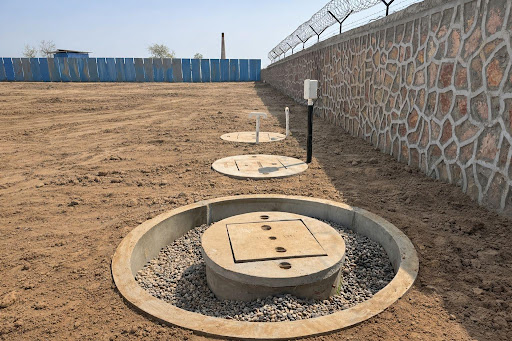
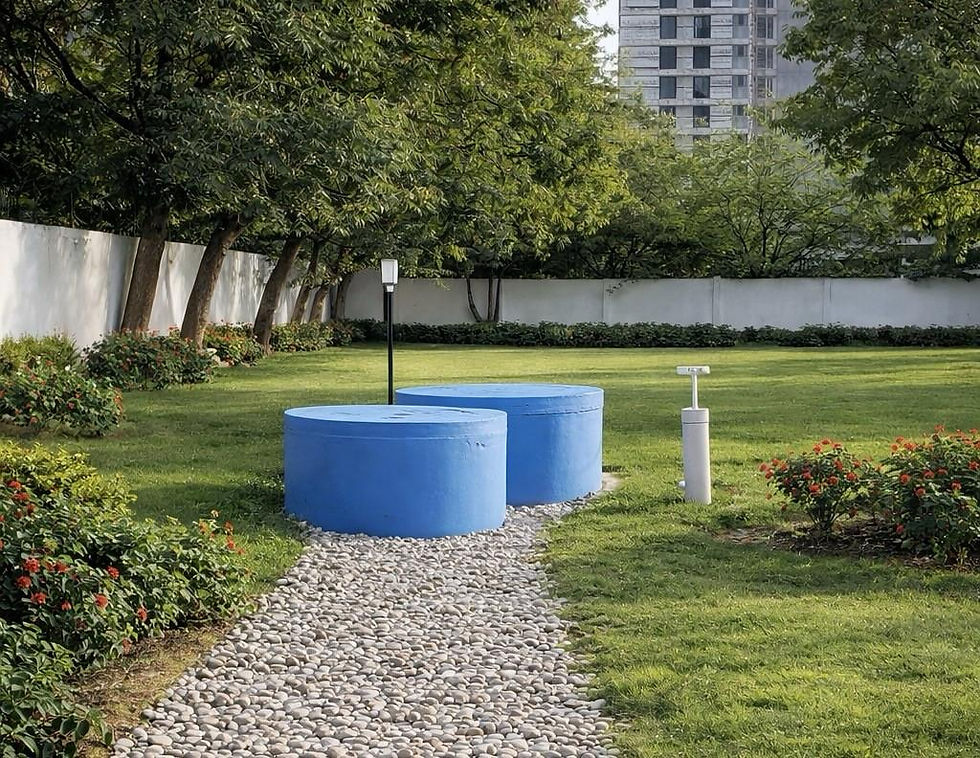
4 additional recharge wells developed
Scientific filtration systems installed
Controlled recharge into deep aquifers enabled
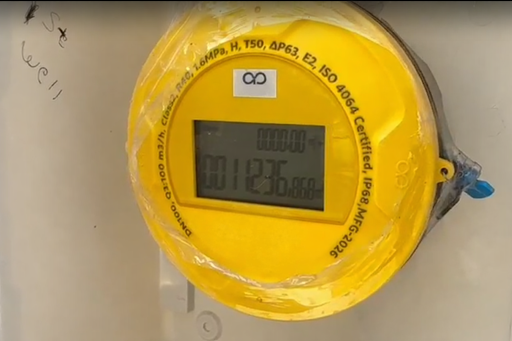
All the recharge data in one portal digitally available with live time data sync.
The Transformation: From Stagnation to Flow
At Changodar, the response was not to work around them — but to work with them, scientifically. Once operational, the system enabled TR to:
Sustainably pump out 2 crore litres (20 million litres) of stagnant water in just 2 months
Recharge water directly into deep aquifers
Maintain an average recharge rate of 30,000 litres per hour
The impact was immediate and measurable:
Construction resumed smoothly
Waterlogging was eliminated
Rainwater became a long-term asset
The Bigger Impact: Beyond the Project
This was not just a drainage solution. It reflected a shift in approach:
From water disposal → to water management
From constraint → to resource
From delay → to resilience
The system continues to function, contributing to groundwater recharge and long-term site sustainability.
When engineered correctly, even challenging ground conditions can support sustainable growth.



Comments